
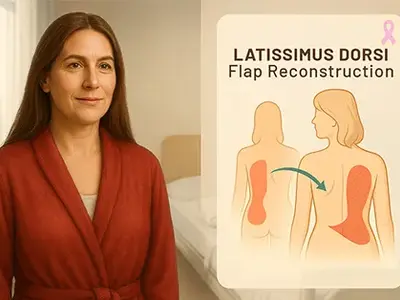




What is Latissimus Dorsi Flap?
The Latissimus Dorsi Flap is a surgical method used in breast reconstruction. It uses muscle, fat, and skin from the upper back to recreate the shape of the breast. The latissimus dorsi is a large, flat muscle that helps move the shoulder. In this procedure, the surgeon rotates this muscle, along with a portion of skin and fat, to the chest area.
This flap remains attached to its original blood supply. This makes it a reliable option. It is especially helpful for patients who have had radiation therapy or do not have enough tissue in the chest for other types of reconstruction.
The latissimus dorsi flap is often used with a breast implant to create the desired breast shape. However, in some cases, it can be used alone, depending on the patient’s body type and surgical goals.
It has been used safely for many years and is considered a standard option in reconstructive breast surgery.
How the Latissimus Dorsi Muscle is Used for Breast Reconstruction
In breast reconstruction, the latissimus dorsi muscle is used to rebuild the breast mound by moving it from the back to the chest. The muscle stays connected to its original blood vessels. This is known as a pedicled flap.
Here is how the process works:
-
The surgeon makes an incision on the back, usually along the bra line.
-
A section of the latissimus dorsi muscle, along with skin and fat, is carefully detached but kept connected to its blood supply.
-
This tissue is tunneled under the skin to the front of the chest.
-
The tissue is then shaped to form a new breast.
If needed, a breast implant is placed under the flap to add volume. The latissimus dorsi flap adds healthy, well-vascularized tissue to the chest. This helps improve the results and healing, especially in patients who had radiation or have thin skin.
The procedure allows for natural movement and contour. It also reduces the risk of complications because the flap has a stable blood supply.
Differences Between Latissimus Dorsi Flap Technique and Other Reconstruction Methods
The latissimus dorsi flap technique differs from other breast reconstruction methods in several important ways. Each method has its own advantages and is chosen based on the patient's needs, body type, and medical history.
Here are the main differences:
1. Donor Site:
-
Latissimus Dorsi Flap: Uses muscle, fat, and skin from the upper back.
-
TRAM or DIEP Flaps: Use tissue from the lower abdomen.
-
Implant-Based Reconstruction: Uses no donor tissue, only implants.
2. Blood Supply:
-
Latissimus Dorsi Flap: Remains attached to original blood vessels (pedicled flap).
-
Free Flaps: Are completely detached and reconnected using microsurgery.
3. Use of Implants:
-
Latissimus Dorsi Flap: Often combined with an implant to achieve desired volume.
-
TRAM or DIEP Flaps: Usually provide enough volume without implants.
-
Implant-Only: No natural tissue is used.
4. Suitability After Radiation:
-
Latissimus Dorsi and Free Flaps: Suitable after radiation because they bring healthy tissue to the chest.
-
Implant-Only: Higher risk of complications after radiation.
5. Recovery and Scarring:
-
Latissimus Dorsi Flap: Leaves a scar on the back.
-
Abdominal Flaps: Leave a scar across the lower abdomen.
-
Implant-Only: No donor site scars.
6. Strength and Function:
-
Latissimus Dorsi Flap: May cause minor weakness in shoulder movement.
-
Abdominal Flaps: May affect abdominal strength.
-
Implant-Only: No loss of muscle strength.
Each method offers different benefits. The latissimus dorsi flap is often preferred when other flap options are not possible or when extra healthy tissue is needed for better healing.
One of the first EBOPRAS certificated Turkish surgeon A good candidate for the latissimus dorsi flap procedure is someone who needs reliable tissue coverage for breast reconstruction, especially when other options are limited or less suitable. This method is often preferred in the following cases: 1. History of Radiation Therapy: 2. Thin or Small Body Frame: 3. Previous Abdominal Surgery: 4. Implant Complications or Revisions: 5. Need for Additional Coverage: This procedure is usually safe and effective, especially when performed by an experienced reconstructive surgeon. It is often used when other flap options are not possible or not preferred. The latissimus dorsi flap breast reconstruction is a carefully planned operation performed under general anesthesia. It usually takes several hours. 1. Preparing the Donor Site: 2. Tunneling the Flap: 3. Reconstructing the Breast: 4. Closing the Incisions: 5. Monitoring and Recovery: The whole process aims to create a natural breast shape while minimizing complications. Most patients return to daily activities within several weeks. The latissimus dorsi flap can be used alone or combined with a breast implant, depending on the patient’s anatomy and goals. This is the most common approach. The latissimus dorsi muscle does not provide enough volume on its own for many patients. So, a breast implant is placed under the flap to add fullness. Why it is used: Advantages: In some cases, the latissimus dorsi flap alone can create the desired breast shape. This works better in patients with smaller breasts or when less volume is needed. Why it is used: Advantages: Both methods are safe. The choice depends on body type, medical history, and personal preference. The surgeon discusses these options with the patient before surgery to choose the best approach. Latissimus dorsi flap breast reconstruction can be done at two different times: immediate or delayed. The timing depends on the patient’s medical condition, cancer treatment plan, and personal preferences. This is done at the same time as the mastectomy. Why it is chosen: Advantages: Considerations: This is performed weeks, months, or even years after the mastectomy. Why it is chosen: Advantages: Both approaches are effective. The best timing is a personal decision made with the surgeon, based on the patient’s cancer treatment, body, and recovery goals. Recovery after latissimus dorsi flap surgery takes time and care. The process is gradual and depends on the patient's overall health and whether an implant was used. Most patients stay in the hospital for 2 to 4 days. During this time: The recovery is usually smooth with proper care. Most patients return to normal daily life within a few weeks, and full strength and motion return over time. Latissimus dorsi flap reconstruction is generally a safe procedure. It has been used for decades and has a high success rate. However, like any surgery, it carries some risks and possible complications. This procedure does not affect vital organs. The latissimus dorsi muscle is not essential for everyday arm movement in most people. Most patients adapt well after surgery. Choosing an experienced surgeon and following post-op care instructions helps reduce these risks.Surgeons
Prof. Dr. Arif Türkmen
Who is a Good Candidate for Latissimus Dorsi Flap Procedure?
Patients who have received radiation often have damaged or thin skin in the chest area. The latissimus dorsi flap brings in healthy, well-vascularized tissue to improve healing and reduce complications.
Some patients do not have enough abdominal tissue for other types of flap reconstruction. The back offers an alternative donor site with reliable tissue.
Patients who had surgery such as a tummy tuck or C-section may not be good candidates for abdominal flaps like DIEP or TRAM. The latissimus dorsi flap avoids this area.
This technique is often used in revision surgeries when implant-only reconstruction has failed or caused problems like capsular contracture.
In some cases, the chest skin is too tight or scarred. The flap provides the extra tissue needed to safely place and support a breast implant.What Happens During a Latissimus Dorsi Flap Breast Reconstruction Procedure?
Step-by-Step Guide to the Latissimus Dorsi Flap Technique
The surgeon makes an incision along the upper back, often hidden in the bra line. They identify and separate a portion of the latissimus dorsi muscle, along with some skin and fat. This tissue remains connected to its blood supply.
The surgeon creates a tunnel under the skin from the back to the chest. They carefully move the flap through this tunnel to the breast area.
Once the flap reaches the chest, the surgeon shapes it to form the breast mound. If additional volume is needed, they place a breast implant under the flap. In some cases, only the flap is enough.
The surgeon closes the incisions on both the back and the chest with sutures. A drain may be placed to prevent fluid buildup and reduce swelling.
After surgery, the patient stays in the hospital for a few days. The medical team checks the flap regularly to ensure good blood flow and healing.Latissimus Dorsi Flap With vs. Without Implant
With Implant:
Without Implant:
Immediate vs. Delayed Latissimus Dorsi Breast Reconstruction
Immediate Reconstruction:
Delayed Reconstruction:
What is the Recovery Process After Latissimus Dorsi Flap Surgery?
Hospital Stay:
First Few Weeks:
Healing Period:
Follow-Up:
Risks of Latissimus Dorsi Flap Reconstruction
Common Risks:
Risks with Implant (if used):
Long-Term Considerations:
Free Consultation
Free Consultation
Menu
Language

WhatsApp Contact
Online